Love
Let Life Live Us As Love
“Thou shalt love the Lord thy God with all thine heart,
and with all thy soul, and with all thy might.”
~ Deuteronomy 6:4-5
“Only if one knows the truth of Love, which is the real nature of Self, will the strong entangled [ego] knot of life be untied. Only if one attains the height of Love will liberation be attained. Such is the heart of all religions. The experience of Self is only Love, which is seeing only Love, hearing only Love, feeling only Love, tasting only Love and smelling only Love, which is bliss.”
~ Sri Ramana Maharshi
Love has befriended me so completely
It has turned to ash and freed me
of every concept and image
my mind has ever known.
~ Hafiz
In the end these things matter most:
How well did you love?
How fully did you love?
How deeply did you learn to let go?”
~ Buddha
“The foundation of the Buddha’s teachings lies in compassion,
and the reason for practicing the teachings is to wipe out the persistence of ego, the number-one enemy of compassion.”“Love and compassion are necessities, not luxuries.
Without them humanity cannot survive.”
~ H.H. Dalai Lama
“Our separation of each other is an optical illusion of consciousness.”
~ Albert Einstein
“The identification of pure awareness with the mind and its creations causes the [ego] apprehension of both an objective world and a perceiver of it.”
~ Patanjali – Yoga Sutras
“Free of ego, living naturally, working virtuously, you become filled with inexhaustible vitality and are liberated forever from the cycle of death and rebirth.”
~ Lao Tzu
“Your task is not to seek for love,
but merely to seek and find all the barriers within yourself
that you have built against it.”
~ Rumi
“Love Is The Law Of Life:
All love is expansion, all selfishness is contraction.
Love is therefore the only law of life.
He who loves lives, he who is selfish is dying.
Therefore, love for love’s sake,
because it is law of life, just as you breathe to live.”
~ Swami Vivekananda
“Let us let go of ego, and
Let Life live us as LOVE!”
~ Ron Rattner, Sutra Sayings
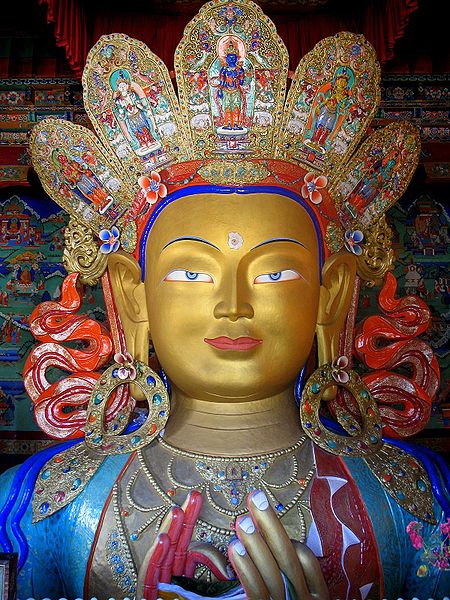
Maitreya – The Next Buddha
“Let Life Live Us As Love”
Einstein revolutionized Western science with his groundbreaking theory of relativity establishing equivalence between all matter and energy in the universe, quantifiable by the simple equation e=mc2.
Since then, for over a century, Western science has more and more shown what ancient shamans, seers, and indigenous societies have known for millennia:
That there is a cosmic web of life connecting everything and everyone in Nature from the greatest galaxies to the tiniest sub-atomic particles; that we are each an integral inter-connected part of Nature’s web of life – not separate from it; that as Einstein observed:
“Our separation of each other is an optical illusion of consciousness.”
Though Einstein’s insights revolutionized quantum physicists’ views of space/time “reality”, most humans haven’t yet changed our way of thinking about such “reality”. Until now, most people mistakenly keep behaving as if we are separated from each other and from Nature, and not part of it. This behavior has resulted in continuing selfishness, cruelty, wars and unsustainable exploitation of our precious planet.
But gradually we are awakening. From seeing everyone and everything as discrete and separated by apparently immutable boundaries, we are more and more realizing that everyone and everything are ever-changing energy phenomena appearing from a common immutable Source of Infinite Universal Awareness, which is LOVE.
All of our selfish, disharmonious and unsustainable behaviors have arisen from human ignorance of the true non-dual nature of the Self and all phenomena as Love; and from consequent mental mis-identification with the illusion of physical separation from each other – called “ego”.
Thus, the ancient Vedic seers told us in the Rig Veda that
“ Ego is the biggest enemy of humans.”
Only rare Buddha-like beings, are said to totally transcend ego identification. So we all experience some degree of separate self-identification. But all humans are in various stages of an ultimately irresistible evolutionary process of ego attrition and transcendence.
In this world of cause and effect, Nature – not ego – is in charge and determines everything. But, while believing ourselves separate from Nature, we exercise apparent free will and seemingly make non-predestined choices.
Depending on whether we are in harmony or disharmony with Nature, these apparent choices hasten or impede our evolution, and create or mitigate crises, sufferings and problems. So, let us ever aspire to be harmonious with Nature:
Ever mindful of our ONENESS with all Life on our precious planet, as Universal Awareness, let us live with loving-kindness and compassion for everyone and everything everywhere.
Ever mindful that in space/time Nature is our nature,
let us see and cherish Nature in everything and everyone everywhere.Ever mindful that Universal Awareness, as Love,
is our ultimate identity and Source:
Let us let go of ego, and
Let Life live us as LOVE!
And So Shall It Be!
Ron’s comments and explanation of “Let Life Live Us As Love”
Dear Friends,
On moving from Chicago to San Francisco in 1960, I was ignorant about spiritual subjects, or religions other than Judaism. Growing up in Chicago, I had become familiar with Judaism’s core teachings:
“ Hear, O Israel: The Lord our God is One”; and
“Thou shalt love the Lord thy God with all thine heart,
and with all thy soul, and with all thy might.”
~ Deuteronomy 6:4-5
But initially, I had no idea of the supremely profound esoteric importance of those teachings, or of devotional Love as crucial in all enduring religious and spiritual traditions. Not until my 1976 spiritual awakening and rebirth did I begin experientially learning about spirituality.
Whereupon, gradually I became inspired by “love of God” as a key spiritual tradition, with which I had instinctively joined in frequently crying and calling for the Divine. And ultimately I became convinced that our true nature and identity is LOVE.
That in space/time “reality” everyone, everything, everywhere is an ever-changing energy phenomenon appearing from a common immutable Source of Infinite Universal Awareness, which is LOVE.
So as Rumi profoundly tells us we need not “seek for love, but merely .. seek and find all the barriers [we] have built against it.” Those barriers are mistaken ideas about our true identity, which we can only discover and transcend by looking within.
This process of finding and letting go of ego-mind barriers to experiencing ourselves as LOVE is explained in the foregoing profound quotations and essay/poem.
May they remind us of our common Self-identity as Love with all Life on our precious planet.
And may they encourage and inspire us to live with loving-kindness and compassion for everyone and everything everywhere.
And so may it be!
Ron Rattner
All We Need is Love
“Life is love and love is life.”
~ Sri Nisargadatta Maharaj
“Love Is The Law Of Life:
All love is expansion, all selfishness is contraction.
Love is therefore the only law of life.
He who loves lives, he who is selfish is dying.
Therefore, love for love’s sake,
because it is law of life, just as you breathe to live.”
~ Swami Vivekananda
“Love is joyous consciousness.
That consciousness is the Creator,
and it is out of Love and joy
that (S)He creates.”
~ Swami Amar Jyoti
“Your task is not to seek for love,
but merely to seek and find all the barriers within yourself
that you have built against it.”
~ Rumi
“God is love;
and he that dwelleth in love
dwelleth in God, and God in him.”
~ 1 John 4:16
“There is only one religion,
the religion of Love.”
~ Sathya Sai Baba
“If there is love in your heart,
you don’t have to worry about rules.”
~ Sri Dhyanyogi Madhusudandas
“Love and compassion are necessities, not luxuries.
Without them humanity cannot survive.”
~ Dalai Lama
“When one realizes that life,
even in the middle of so many contradictions, is a gift,
that love is the source and the meaning of life,
how can they withhold their urge to do good to another fellow being?”
~ Pope Francis – 2017 TED Talk
“Our purpose is process –
Metamorphic process.
Gleaning meaning in matter,
We learn all that matters –
We learn all that matters is LOVE!”
~ Ron Rattner, Sutra Sayings
Let us let go of ego, and
Let Life live us as LOVE!
~ Ron Rattner, Sutra Sayings

All We Need is Love
Dear Friends,
To brighten our equinox season – and the rest of our lifetimes –
today I’m privileged to share a sure cure for all our earthly sufferings –
a true panacea for transmuting all our sorrows and sufferings to eternal Joy.
Thanks to The Beatles, I have ‘discovered’ an open-Source solution for all of Humanity’s problems – problems which cannot be solved from the same levels of consciousness that created them.
All of our problems and sufferings have arisen from apparent lack of LOVE.
So, to solve and cure them
“All we need is LOVE, LOVE, LOVE.”
Accordingly, I have posted the above wisdom quotes about “Love” and have embedded below a video of the original 1968 Beatles recording session of their classic song, “All You Need Is Love”, followed by the lyrics composed by John Lennon and Paul McCartney.
Dedication
May these inspiring “Love” messages help brighten our equinox season
– and the rest of our lives.
And so may it be!
Ron Rattner
Video: The Beatles – “All You Need Is Love”
Lyrics – “All You Need Is Love”
Love, love, love
Love, love, love
Love, love, loveThere’s nothing you can do that can’t be done
Nothing you can sing that can’t be sung.
Nothing you can say, but you can learn how to play the game
It’s easy.
Nothing you can make that can’t be made
No one you can save that can’t be saved
Nothing you can do, but you can learn how to be you in time
It’s easy.
All you need is love
All you need is love
All you need is love,
Love is all you needAll you need is love
All you need is love
All you need is love, love
Love is all you needNothing you can know that isn’t known
Nothing you can see that isn’t shownThere’s nowhere you can be,
that isn’t where you’re meant to be
It’s easy.
All you need is love
All you need is love~ John Lennon, Paul McCartney, The Beatles
Harmony ~ Quotations and Sayings
“Harmony is the secret principle of life.”
~ Paramahansa Yogananda
“Love is the energizing elixir of the Universe,
the cause and effect of all Harmony.”
~ Rumi
“When there is harmony between the mind, heart and resolution
then nothing is impossible.”
~ Rig Veda

Introduction to Harmony Quotations and Sayings
Dear Friends,
To commemorate the 2021 Vernal Equinox season, I’ve augmented and posted below a treasury of inspiring quotations about “Harmony”, which express enduring spiritual ideas and ideals of fundamental significance.
This collection of quotations and sayings about “Harmony” is dedicated to helping heal the world, by awakening us to our spiritual Oneness with Nature and Universal Awareness, as LOVE.
Please deeply reflect upon this perennial wisdom.
And so may it be!
Ron Rattner
Harmony Quotations and Sayings
“Harmony is the secret principle of life.”
~ Paramahansa Yogananda
“When there is harmony between the mind, heart and resolution
then nothing is impossible.”
~ Rig Veda
”Neither human wisdom nor divine inspiration
can confer upon man any greater blessing than
[to live a life of happiness and harmony here on earth].”
~ Plato
“Clothe yourselves with compassion,
kindness, humility, gentleness and patience.
Bear with each other and forgive one another . .
And over all these virtues put on LOVE,
which binds everything together in perfect harmony.”
~ Colossians 3: 12-17
“(A)ll problems of existence are essentially problems of harmony.”
~ Sri Aurobindo
“The heart and mind can find peace and harmony
by contemplating the transcendental nature
of the true Self as supreme effulgent life.”
~ Patanjali
“Where the heart is full of kindness which seeks no injury to another,
either in act or thought or wish, this full love creates an atmosphere of harmony,
whose benign power touches with healing all who come within its influence.
Peace in the heart radiates peace to other hearts,
even more surely than contention breeds contention.”
~ Patanjali, Yoga Sutra
“Affirm divine calmness and peace,
and send out only thoughts of love and goodwill
if you want to live in peace and harmony.
Never get angry, for anger poisons your system.”
~ Paramahansa Yogananda
“A harmonized mind produces harmony
in this world of seeming discord.”
~ Paramahansa Yogananda
“Go forth in every direction –
for the happiness, the harmony, the welfare of the many.
Offer your heart, the seeds of understanding,
like a lamp overturned and re-lit, illuminating the darkness.”
~ Buddha
“The life ahead can only be glorious
if you learn to live in total harmony with the Lord.”
~ Shirdi Sai Baba
“Happiness is when what you think,
what you say,
and what you do are in harmony.”
~ Mahatma Gandhi
“Virtue is harmony.”
~ Pythagoras
“God reveals himself in the orderly harmony of what exists.”
~ Albert Einstein
“Always aim at complete harmony of thought and word and deed.
Always aim at purifying your thoughts and everything will be well.”
~ Mahatma Gandhi
“The sage is one with the world,
and lives in harmony with it.”
~ Lao Tzu
”One who lives in accordance with nature
does not go against the way of things,
but moves in harmony with the present moment.”
~ Lao Tzu
“He who lives in harmony with himself
lives in harmony with the universe.”
~ Marcus Aurelius
“The essence of saintliness
is total acceptance of the present moment,
harmony with things as they happen.”
~ Sri Nisargadatta Maharaj
”The superior person is in Harmony,
but does not follow the crowd.
The lesser person follows the crowd,
but is not in Harmony.”
~ Confucius
“Love is the energizing elixir of the Universe,
the cause and effect of all Harmony.”
~ Rumi
“Love opens all doors, no matter how tightly closed they may be, no matter how rusty from lack of use. Your work is to bring unity and harmony, to open all those doors which have been closed for a long time. Have patience and tolerance. Open your heart all the time.”
~ Maharishi Mahesh Yogi
“The life of this world is nothing but the harmony of opposites”
~ Rumi
“Where there is discord,
let us sow Harmony.”
~ Peace Prayer attributed to St. Francis of Assisi
”Without law or compulsion,
men would dwell in harmony.”
~ Lao Tzu
As soon as laws are necessary for men,
they are no longer fit for freedom.
~ Pythagoras
”Happy the man whose lot it is to know The secrets of the earth.
He hastens not To work his fellows hurt by unjust deeds,
But with rapt admiration contemplates
Immortal Nature’s ageless harmony,
And how and when the order came to be.”
~ Euripides
”To have a positive religion is not necessary.
To be in harmony with yourself and the universe is what counts,
and this is possible without positive and specific formulation in words.”
~ Johann Wolfgang von Goethe
“The unlike is joined together,
and from differences results the most beautiful harmony.”
~ Heraclitus
”Mutual respect and mutual listening
are the foundations of harmony within the family.”
~ Buddha
“Harmony can not thrive in a climate of
mistrust, cheating, bullying;
mean-spirited competition.”
~ Dalai Lama
”Wherever I go meeting the public…
spreading a message of human values …
[and] harmony, is the most important thing.”
~ Dalai Lama
”If you want peace and harmony in the world,
you must have peace and harmony in your hearts and minds.”
~ Sri Nisargadatta Maharaj
“Happiness is not a matter of intensity
but of balance and order and rhythm and harmony.”
~ Thomas Merton
”Harmony sinks deep into the recesses of the soul
and takes its strongest hold there,
bringing grace also to the body and mind as well.
Music is a moral law. It gives a soul to the universe,
wings to the mind, flight to the imagination, a charm to sadness,
and life to everything. It is the essence of order.”
~ Plato
”Music then is simply the result of
the effects of Love on rhythm and harmony.”
~ Plato
”Music is an agreeable harmony for the honor of God
and the permissible delights of the soul.”
”Harmony is next to Godliness”
~ Johann Sebastian Bach
“If only the whole world could feel the power of harmony.”
~ Wolfgang Amadeus Mozart
“Every element has a sound, an original sound from the order of God;
all those sounds unite like the harmony from harps and zithers.”
~ Hildegard of Bingen
“A life in harmony with nature,
the love of truth and virtue,
will purge the eyes to understanding her text.”
~ Ralph Waldo Emerson
“With an eye made quiet by the power of harmony,
and the deep power of joy,
we see into the life of things.”
~ William Wordsworth
“Life’s errors cry for the merciful beauty that
can modulate their isolation
into a harmony with the whole.”
~ Rabindranath Tagore
“The highest education is that
which does not merely give us information
but makes our life in harmony with all existence.”
~ Rabindranath Tagore
“Training the intellect does not result in intelligence.
Intelligence comes into being when one acts in perfect harmony,
both intellectually and emotionally.”
~ J. Krishnamurti
“As long as people will shed the blood of innocent creatures
there can be no peace, no liberty, no harmony between people.
Slaughter and justice cannot dwell together.”
~ Isaac Bashevis Singer
”I believe in Spinoza’s God, who reveals Himself in the lawful harmony of the world, not in a God who concerns Himself with the fate and the doings of mankind…”
~ Albert Einstein
”The harmony of natural law reveals an Intelligence of such superiority that,
compared with it, all the systematic thinking and acting of human beings
is an utterly insignificant reflection.”
~ Albert Einstein
“In art, and in the higher ranges of science,
there is a feeling of harmony which underlies all endeavor.
There is no true greatness in art or science
without that sense of harmony.”
~ Albert Einstein
“My feeling is religious insofar as I am imbued
with the consciousness of the insufficiency of the human mind
to understand more deeply the harmony of the Universe
which we try to formulate as “laws of nature”
~ Albert Einstein
”Today wherever you go, carry the intention of peace, love, and harmony in your heart.” “Just as light brightens darkness, discovering inner fulfillment can eliminate any disorder or discomfort. This is truly the key to creating balance and harmony in everything you do.”
~ Deepak Chopra
”There is great freedom in simplicity of living, and after I began to feel this, I found harmony in my life between inner and outer well-being.
There is a great deal to be said about such harmony, not only for an individual life but also for the life of a society.
It’s because as a world we have gotten ourselves so far out of harmony,
so way off on the material side, that when we discover something like nuclear energy we are still capable of putting it into a bomb and using it to kill people!
This is because our inner well-being lags so far behind our outer well-being.”
~ Peace Pilgrim
”Everyone has the perfect gift to give the world-
and if each of us is freed up to give our unique gift,
the world will be in total harmony.”
~ R. Buckminster Fuller
“Beauty of style and harmony
and grace and good rhythm
depend on simplicity.”
~ Plato (The Republic)
“Out of clutter find simplicity.
From discord make harmony.
In the middle of difficulty lies opportunity.”
~ Albert Einstein
“The simplification of life is one of the steps to inner peace.
A persistent simplification will create an inner and outer well-being
that places harmony in one’s life.”
~ Peace Pilgrim
“Adversity draws men together and produces beauty and harmony in life’s relationships, just as the cold of winter produces ice-flowers on the window-panes, which vanish with the warmth.”
~ Soren Kierkegaard
“Harmony with land is like harmony with a friend;
you cannot cherish his right hand and chop off his left”
~ Aldo Leopold
“Live harmlessly in Harmony.”
~ Ron Rattner, Sutra Sayings
“How can there be harm in me,
when I’m in harmless Harmony?”
~ Ron Rattner, Sutra Sayings
“Let us live in harmless harmony,
and stay in cosmic synchrony,
as we play in Nature’s symphony.”
~ Ron Rattner, Sutra Sayings
“Don’t disrupt and polarize,
but syncretize and harmonize.”
~ Ron Rattner, Sutra Sayings
Invocation
Imbued with heartfelt “Harmony”,
May we help heal the world –
by Awakening NOW
To the Eternal inner Light
Of our ONENESS
with Nature and Universal Awareness,
as LOVE.
And so shall it be!
Ron Rattner
How Shall We Solve Our Planetary Problems?
“No problem can be solved
from the same level of consciousness that created it.”
~ Albert Einstein
“We are what we think.
All that we are arises with our thoughts.
With our thoughts, we make the world.”
~ Buddha
“As a man thinketh in his heart, so is he.”
~ Proverbs 23:7
“The release of atom power.. changed everything
except our way of thinking…the solution to this problem
lies in the heart of mankind.”
~ Albert Einstein
“Ultimately, the decision to save the environment
must come from the human heart.
The key point is a call for a genuine sense of universal responsibility
that is based on love, compassion and clear awareness.”
~ Dalai Lama (From “Humanity and Ecology”)
“The intuitive mind is a sacred gift
and the rational mind is a faithful servant.
We have created a society that honors the servant
and has forgotten the gift.”
~ Albert Einstein
“I think with intuition.
The basis of true thinking is intuition.
Indeed, it is not intellect,
but intuition which advances humanity.
Intuition tells a man his purpose in life.
One never goes wrong following his feelings.
I don’t mean emotions, I mean feelings,
for feelings and intuition are one.”
~ Albert Einstein

How Shall We Solve Our Planetary Problems?
Q. How can humankind resolve its critical planetary problems?
A. By addressing them intuitively from elevated heart levels of awareness.
The critical problems now confronting humanity have arisen from low ego-mind levels of human consciousness, which must be transcended for our peaceful survival on planet Earth.
As Albert Einstein aptly observed:
“No problem can be solved from the same level of consciousness that created it.”
To resolve critical human problems we must elevate Humanity’s level of consciousness, from the human mind – which is thought – to the human heart, which is intuition. And then, with “a genuine sense of universal responsibility that is based on love, compassion and clear awareness” [Dalai Lama], we can intuitively and cooperatively resolve our problems.
Only with feelings, insights and actions arising from loving kindness and compassion for all Life everywhere, shall humankind truly transcend and cooperatively resolve its critical ecologic and economic problems.
With opened hearts we can and we shall resolve our critical planetary problems.
Invocation
May we open our hearts
to our innate empathy, kindness and compassion.
And with benevolent and focused intention,
may we so realize our ONENESS with everyone and everything;
And thereby lovingly resolve our critical planetary problems
to bless all Life everywhere – as LOVE!
And so it shall be!
Ron Rattner
What Is Life?
~ Quotations and Sutras
“Life is everything. Life is God.
Everything changes and moves,
and that movement is God. . .
To love life is to love God.”
~ Leo Tolstoy, War and Peace

Introduction to “What Is Life?” ~ Quotations and Sutras
Dear Friends,
Throughout human history philosophers have wondered about perennially puzzling questions of life’s meaning or purpose, if any. For example, Aristotle declared that “Happiness is the meaning and the purpose of life, the whole aim and end of human existence.”
Most SillySutras writings are offered to help us live happier lives; and some address questions about possible purpose or meaning of human existence. (E.g. see “Is Earth-life Purposeful?”)
For those who wonder why we’re here, this posting shares many noteworthy philosophical and mystical quotations about “Life”, plus a collection of Ron Rattner’s Sutra Sayings about “What Is Life?”.
Please consider and enjoy these quotations and sutras, not as spiritual truths but as philosophical speculations about human life on Earth. And don’t forget that with a completely silent mind there are no philosophical questions or answers – just choiceless Universal Awareness.
Ron Rattner
“What Is Life?” ~ Quotations
“The unexamined life is not worth living.”
“The end of life is to be like unto God;
and the soul following God, will be like unto Him;
He being the beginning, middle, and end of all things.”
~ Socrates
“Life is a pilgrimage.
The wise man does not rest by the roadside inns.
He marches direct to the illimitable domain of eternal bliss,
his ultimate destination.”
~ Swami Sivananda
“One word
Frees us of all the weight and pain of life:
That word is love.”
~ Sophocles
“Life without love, is no life at all.”
~ Leonardo da Vinci
“Life without love is like a tree without blossoms or fruit.”
“Love has no other desire but to fulfill itself.
To melt and be like a running brook that sings its melody to the night.
To wake at dawn with a winged heart and give thanks for another day of loving”
~ Khalil Gibran
“Life is not a problem to be solved,
but a reality to be experienced.”
~ Soren Kierkegaard
“What is life? It is the flash of a firefly in the night. It is the breath of a buffalo in the wintertime. It is the little shadow which runs across the grass and loses itself in the sunset.”
~ Crowfoot, 1890
“Happiness is the meaning and the purpose of life,
the whole aim and end of human existence.”
~ Aristotle
“Be happy for this moment.
This moment is your life.”
~ Omar Khayyam
“You are not ‘in the now;’ you are the now.
That is your essential identity-
the only thing that never changes.
Life is always now. Now is consciousness.
And consciousness is who you are.”
~ Eckhart Tolle
Every man’s life is a fairy tale written by God’s fingers.
~ Hans Christian Andersen
“Life is God’s novel. Let him write it.”
~ Isaac Bashevis Singer
Life is a process. We are a process.
The universe is [an evolutionary] process.
~ Anne Wilson Schaef (edited)
“Life is a series of natural and spontaneous changes.
Don’t resist them; that only creates sorrow.
Let reality be reality.
Let things flow naturally forward in whatever way they like.”
~ Lao Tzu
“Men are born soft and supple; dead, they are stiff and hard.
Plants are born tender and pliant; dead, they are brittle and dry.
Thus whoever is stiff and inflexible is a disciple of death.
Whoever is soft and yielding is a disciple of life.
The hard and stiff will be broken. The soft and supple will prevail.”
~ Lao Tzu
“The history of our spiritual life is a continuing search
for the unity between ourselves and the world.
Religion, art, and science follow, one and all, this aim.”
~ Rudolf Steiner
“Life is a perpetual instruction in cause and effect.”
~ Ralph Waldo Emerson
Life is a succession of lessons
which must be lived to be understood.
All is riddle, and the key to a riddle is another riddle.
~ Ralph Waldo Emerson
“Death is a stripping away of all that is not you.
The secret of life is to “die before you die” —
and find that there is no death.”
~ Eckhart Tolle
“The two most important days in your life are
the day you are born and the day you find out why.”
~ Mark Twain
Life is a dream for the wise,
a game for the fool,
a comedy for the rich,
a tragedy for the poor.
~ Sholom Aleichem
What Is Life? ~ Sutra Sayings
What Is Life?
Life is a word – an idea –
with many meanings
which are mental,
not fundamental.
As beauty is in the eye of the beholder,
the meaning of “life” is what we think it to be.
But beyond our Earth-life “reality”
Life is not mental,
but Transcendental:
Life is Eternal Mystery.
What Is Life?
Life is awakened Awareness.
What Is Life?
Life is aliveness.
What Is Life?
Life is BEING, not doing.
Life is BEING, not becoming.
What Is Life?
Life is infinite experience
Of Infinite Potentiality
From infinite perspectives.
What Is Life?
What is death?
In duality ‘reality’
the meaning of life,
depends upon the meaning of death.
When we Know the meaning
of both life and death,
we shall Know no death
– only awakened Awareness.
What Is Life?
Life is an “in a body” experience.
What Is Life?
Life is an ongoing identity crisis:
An endless opportunity to
transcend entity identity.
What Is Life?
Life is an idea game
in which we’re challenged
to make ideal
our ideas of what’s “real”.
What Is Life?
Life is endless exploration in time.
Until we discover that:
Life is NOW,
Ever NOW,
Never then!
What Is Life?
Life is an exploration-experience-experiment in space/time..
What Is Life?
Life is a semantic space/time sojourn.
What Is Life?
Life is a round trip metaphoric journey,
on which we are destined to return to point of origin.
On return, we learn – we never left.
What Is Life?
Life is a journey: an ego trip.
Life is a journey: a mind trip.
What Is Life?
Life is a workshop for ego addicts; an ego trip.
What Is Life?
Life is a healing/wholing gnosis process.
What Is Life?
Life is an evolutionary learning process.
Gleaning meaning in matter,
we learn all that matters —
we learn all that matters is
LOVE!
What Is Life?
Life is a mind field –
a field of dreams,
where all we ever see or seem
is but a dream within a dream.
What Is Life?
Life is a cosmic game of hide and seek.
Self hides in plain insight
and, knowingly or unknowingly,
we seek Self.
We seek and seek
until we find
beyond the mind,
that we are what we seek –
that what we seek is the seeker.
What Is Life?
Life is a learning laboratory
for discovering immortality –
experimentally and experientially.
What Is Life?
Life is suffering;
Life is mystery.
Life’s miseries are mental,
while it’s mystery is Transcendental.
What Is Life?
Life is a cosmic masquerade;
an endless comedy/tragedy/mystery drama.
The masquerade play continues with countless acts and scenes.
Each actor must participate in innumerable roles,
until each is ultimately unmasked,
with true identity revealed as
Common “I-ness”.
What Is Life?
Life is a mystery school
in which knowingly or unknowingly
we are all students –
each learning about,
and seeking to solve,
the same Mystery –
the mystery of Divinity.
Though we may never solve it,
we shall ever evolve it –
NOW!
Ron’s Comments about “What Is Life” ~ Quotations and Sutras
Dear Friends,
The foregoing quotations and whimsical sutra speculations about Earth-life may help point to ways for us to live happier lives.
Throughout human history philosophers have wondered – and keep wondering – about the purpose or significance of “life” on Earth.
And for millennia rare avatars, saints, sages and other mystical inner explorers have reported discovering within an infinitely potential Universal Awareness – which is the sole Source of all we call “Life” in the “real world” – that can be experienced in deep meditation, but not described. Some of their quotations are shared above.
Though I’ve irreversibly accepted the existence of an indescribable Divine Life Source, I have nonetheless shared the foregoing quotations and sutras about “Life” – which are based on philosophical theories and mystical musings – as helpful hints for living happier Earth-lives.
Invocation
May the foregoing “What Is Life?” quotations and sutra sayings help all of us find increasing happiness and fulfillment of our deepest inner aspirations, as we live our lives from ever elevated perspectives.
And so may it be!
Ron Rattner
Discovering Sri Ramana Maharshi’s Non-dual Devotion
~ Ron’s Memoirs
“The end of all wisdom is love, love, love.”
“Love is verily the heart of all religions.”
~ Sri Ramana Maharshi
“Investigation into the Self is nothing other than devotion.”
~ Sri Ramana Maharshi — Vivekachudamani, verse 32
“On scrutiny, supreme devotion and jnana are in nature one and the same. To say that one of these two is a means to the other is due to not knowing the nature of either of them. Know that the path of jnana and the path of devotion are interrelated. Follow these inseparable two paths without dividing one from the other.”
~ Sri Ramana Maharshi
“Only if one knows the truth of Love, which is the real nature of Self, will the strong entangled [ego] knot of life be untied. Only if one attains the height of Love will liberation be attained. Such is the heart of all religions. The experience of Self is only Love, which is seeing only Love, hearing only Love, feeling only Love, tasting only Love and smelling only Love, which is bliss.”
~ Sri Ramana Maharshi
“Pure knowledge and pure love are one and the same thing.
Both lead the aspirants to the same goal. The path of love is much easier.”
~ Ramakrishna Paramahamsa
“Love is seeing the unity under the imaginary diversity.
“Love says ‘I am everything’. Wisdom says ‘I am nothing’. Between the two, my life flows. Since at any point of time and space I can be both the subject and the object of experience, I express it by saying that I am both, and neither, and beyond both.”
~ Nisargadatta Maharaj
“He who loves me is made pure; his heart melts in joy.
He rises to transcendental consciousness by the rousing of his
higher emotional nature. Tears of joy flow from his eyes; his
hair stands on end; his heart melts in love. The bliss in that
state is so intense that forgetful of himself and his surroundings he sometimes weeps profusely, or laughs or sings, or dances; such a devotee is a purifying influence upon the whole universe.”
~Srimad Bhagavatam 11.8 – supreme devotion (para-bhakti) as described by Sri Krishna to His disciple Uddhave.
“[I]f you weep before the Lord, your tears wipe out the mind’s impurities of many births, and his grace immediately descends upon you. It is good to weep before the Lord.” … “Devotional practices are necessary only so long as tears of ecstasy do not flow at hearing the name of Hari. He needs no devotional practices whose heart is moved to tears at the mere mention of the name of Hari.”
~ Shri Ramakrishna Paramahamsa
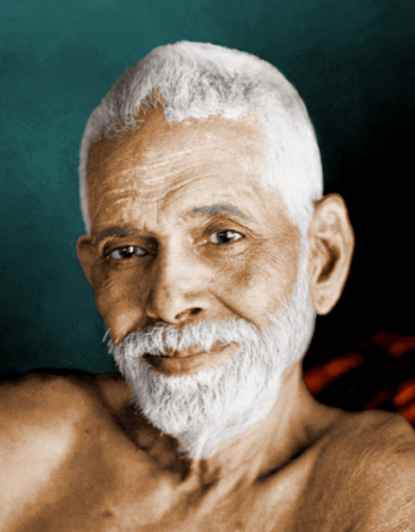
Sri Ramana Maharshi
Introduction
Dear Friends,
The following stories (about my memorable pilgrimage to Tiruvannamalai, South India), illustrate fundamental spiritual Truths about every human being. They tell how I resolved (as illusory) a seeming paradoxical conflict between my deep devotional tendencies (as a “frequent crier”) to spontaneously cry and call out-loud to God, and my irreversible intellectual and intuitive acceptance of Sri Ramana Maharshi’s non-duality wisdom path of constant silent self-enquiry of “who am I?”.
These memorable pilgrimage stories recount how my mental dilemma was resolved, with realization of the following spiritual principles:
Just as every snowflake temporarily manifests a unique crystalline form but shares an enduring watery essence, so too every human (including Self-realized saints, sages, and seers) impermanently manifests a uniquely limited physical form and perspective in each mortal lifetime, but shares ONE immortal and infinitely potential, spiritual Source – non-dual Universal Awareness as LOVE.
The stories also reveal as ultimately illusory any apparent conflict between different spiritual paths, religious rituals, or behaviors – like Sri Ramana Maharshi’s wisdom path of silent self-enquiry and Ramakrishna Paramahansa’s devotional path of praying and crying to God, or between strict priestly conformance with religious rituals and their utter disregard by avadhutas; that all such apparent conflicts are transcended by LOVE; that even Sri Ramana Maharshi declared that “the end of all wisdom is love, love, love.”
Please read, reflect and enjoy these stories.
Ron Rattner
Discovering Non-dualism
During my early days as a “born-again Hindu”, I discovered wisdom teachings of legendary twentieth century sage Sri Ramana Maharshi about the Vedic path of Advaita, the oldest extant school of Indian Philosophy. Advaita means non-dualism and its teachings are aimed at experiencing non-dual Reality via relentless self-inquiry – incessantly asking “Who am I?”.
Intellectually I soon became convinced of the ultimate Truth of Sri Ramana’s non-dualistic teachings. Non-dualism even seemed quite consistent with my early Jewish acculturation with the fundamental prayer: “Hear O Israel the Lord our God, the Lord is ONE” ~ Deuteronomy 6:4; Mark 12:29
Yet, seemingly paradoxically, I displayed preponderantly devotional propensities of calling and crying to the Divine. And I identified with Shri Ramakrishna, as a bhakta – a devotional practitioner – more than with Sri Ramana Maharshi, who was an exemplar of the silent inner wisdom path – a jnani.
Until retirement, while maintaining my busy law practice I found only limited time to read and reflect on non-duality and other spiritual wisdom teachings, mostly on weekends. So I used to jokingly tell spiritual friends that I prayed and cried as a bhakta on weekdays but on weekends I became a “Seventh Day Advaitist”
On retirement from law practice in January 1992, I journeyed to India, intending to further explore the Advaita path of non-duality. After planned visits to see my Guruji, Shri Dhyanyogi Madhusudandas, in Ahmedabad and my daughter Jessica at Ammachi’s Kerala ashram, the India trip itinerary concluded with a spiritual sojourn in the Tamil Nadu town of Tiruvannamalai, near sacred Mount Arunachala, where Sri Ramana Maharshi had resided for most of his adult life. This would be an opportunity to me to become an every day – not just a seventh day – advaitist.
Pilgrimage to Tiruvannamalai
So, in February 1992, together with my daughter Jessica I traveled by train from Ammachi’s ashram in sultry Kerala to the Ramana ashram at the much more arid Tamil Nadu town of Tiruvannamalai. While I stayed at Ammachi’s ashram, Jessica had been so busy doing her assigned daily tasks (seva) that we had very few opportunities to visit together alone. So, I was hoping to spend ‘quality time’ with her and to have her as my Tiruvannamalai guide, since she had previously visited the Ramana ashram. But that didn’t happen.
Nonetheless, I had a wonderful stay in Tiruvannamalai with memorable experiences on and near Mount Arunachala. And at the Ramana ashram I largely resolved my confusion about the imagined conflict between non-dualism and devotion. Here’s what happened:
Ramana ashram
On our arrival at the Ramana ashram Jessica and I were assigned a pleasant cottage room with private toilet which, though quite basic, was much more comfortable than my small noisy cell at Ammachi’s ashram. Moreover, I immediately had much more vitality at the Ramana ashram than at the Kerala ashram, where I had experienced diminished energy.
But to my surprise, Jessica informed me that instead of being my guide and companion she wished to dedicate her stay in Tiruvannamalai to solitary spiritual practices. She told me that as a spiritual austerity she had decided to daily circumambulate barefooted sacred Mount Arunachala and its adjoining holy sites – an ancient practice known as giri pradakshina encouraged by Sri Ramana Maharshi and practiced for centuries by him and many other saints and pilgrims.
Ambivalently, I was pleased that Jessica was prioritizing such spiritual practices, but disappointed at not having anticipated ‘quality time’ with her. So every morning well before sunrise, while I still slept, Jessica left our cottage and each day I was on my own, except in evenings before we retired in our shared cottage.
Virupaksha cave
Most days while Jessica was walking barefooted around Mount Arunachala I walked in sandals up the mountain – from the ashram to Virupaksha cave, a shrine place where Sri Ramana had lived for sixteen years. Though the cave was a public shrine, I was always there in solitude with no other visitors present. As I meditated there, I gratefully experienced and communed with Sri Ramana’s subtle peaceful presence.
One day I departed the cave in a dream-like ‘altered state of awareness’ and began slowly walking down the mountain with a stilled mind. Dressed in white I was so descending the narrow rocky path to the ashram, when – as if in a dream – I beheld coming up the path toward me three very elderly men, with long gray hair and long beards each wearing a white robe or dhoti. Each appeared as an archetypical ‘holy man’.
When we met on the mountain path, as if in a waking dream, each of the old men silently kneeled and kissed my sandaled feet. No word was uttered. After this silent ritual they continued walking up the Arunachala path and I continued descending to the ashram with a perfectly stilled mind.
Though that experience was unforgettable, I can’t specify its significance . However, I felt I had received inexpressible blessings from those holy men; that only in such a spiritually elevated environment could such a boon occur. But, presumably, from Sri Ramana’s non-dual perspective, attachment to any such outer illusionary experience impedes ultimate inner experience of Oneness with All.
Sri Ramana’s samadhi shrine
When not on Mount Arunachala, most of my time spent at the ashram was at the large samadhi shrine hall, where Sri Ramana is entombed. There I continued to often experience the subtle peaceful presence of Sri Ramana, though not as powerfully as at Virupaksha cave.
The samadhi shrine is a memorable place which, since Sri Ramana’s mahasamadhi in 1950, has continued to magnetically attract devotees from all over the world. Sometimes I meditated sitting there, sometimes I meditatively walked around the hall, and sometimes on the porch I read books about Sri Ramana which I obtained at the ashram office.
Reconciling Ron’s Devotion with Sri Ramana’s Non-duality
Another blessing of my stay at the Ramana ashram was that while there I largely resolved the seeming dichotomy between my deep devotional tendencies and non-dual self-identity. I learned that Ramana had taught that “supreme devotion and jnana are in nature one and the same”. And I realized that perception of paradox depends on an illusory ego-mind perspective; while from an elevated perspective ultimate devotion (Divine love, bhakti) and ultimate Self awareness (wisdom, jnana) are “one and the same” – like obverse sides of the same coin.
Though not permanently abiding in a state of elevated awareness, like Sri Ramana or Guruji, I had previously been blessed with unforgettable ‘peek’ experiences of Self-identification as pure Awareness and of seeing everyone and everything as Divine. And at the ashram I read a Sri Ramana biography that sparked the bhakti/jnana insight which helped me reconcile the seeming conflict between my distinct devotional tendencies and my irreversible acceptance of advaita non-duality philosophy.
As I read about Sri Ramana’s “enlightenment” experience I discovered that, contrary to popular belief, which usually associates Sri Ramana only with advaita wisdom, the great Sage also displayed and acknowledged the bhakti emotion of devotion.
At the time of his absorption in the Self, Sri Ramana was in his seventeenth year and living in the Indian city of Madurai. Thereafter he experienced dramatic daily life changes. With the emotion of devotion, Sri Ramana began to regularly visit the renowned Meenakshi temple in Madurai. As much later he recalled for his biographer:
“One of the new features related to the temple of
Meenakshi sundaresvrar. Formerly I would go there rarely with
friends, see the images, put on sacred ashes and sacred
vermillion on the forehead and return home without any
perceptible emotion. After the awakening into the new life, I
would go almost every evening to the temple. I would go alone and stand before Siva or Meenakshi or Nataraja or the sixty-three saints for long periods. I would feel waves of emotion
overcoming me. The former hold (Alambana) on my body had been given up by my spirit, since it ceased to cherish the idea I-am-the-body (Dehatma-buddhi). The spirit therefore longed to have a fresh hold and hence the frequent visits to the temple and the overflow of the soul in profuse tears. This was God’s (Isvara’s) play with the individual spirit. I would stand before Isvara, the Controller of the universe and the destinies of all, the omniscient and omnipresent, and occasionally pray for the descent of His grace upon me so that my devotion might increase and become perpetual like that of the sixty-three saints. Mostly I would not pray at all, but let, the deep within flow on and into the deep without. Tears would mark this overflow of the soul and not betoken any particular feeling of pleasure or pain.”
~ Self Realization, The Life and Teachings of Sri Ramana Maharshi, by B.V. Narasimha Swami pp. 23-24.1
Thus, even after his Self Realization, Sri Ramana had prayed for devotion. And his prayers were often accompanied by, and answered with, copious tears. Sri Ramana’s experience shows that highest knowledge is the same as the highest devotion; that jnana and Para bhakti are the same.
On reading Sri Ramana’s dramatic experience I was reminded that devotional tears are the ‘language of the heart’; that tears can express our ineffable joy in ephemerally becoming one with THAT, while also they may betoken our ceaseless longing to be merged forever as THAT.
As Mother Meera has observed:
“Even avatars have to desire to be in God in every moment. And when avatars die, they desire with all their being to be united with God. …..Look at Ramakrishna. How much he wept and prayed for the Divine Mother.”
~ Mother Meera to Andrew Harvey, “Hidden Journey”, Page 236
Thus, intense feelings of the heart, which are otherwise inexpressible, are communicated by tears; and, as we soulfully pray to the Beloved with love and longing, our tears may say what words can not say; and our Heart of Hearts may answer us with tears more eloquent than any other language.
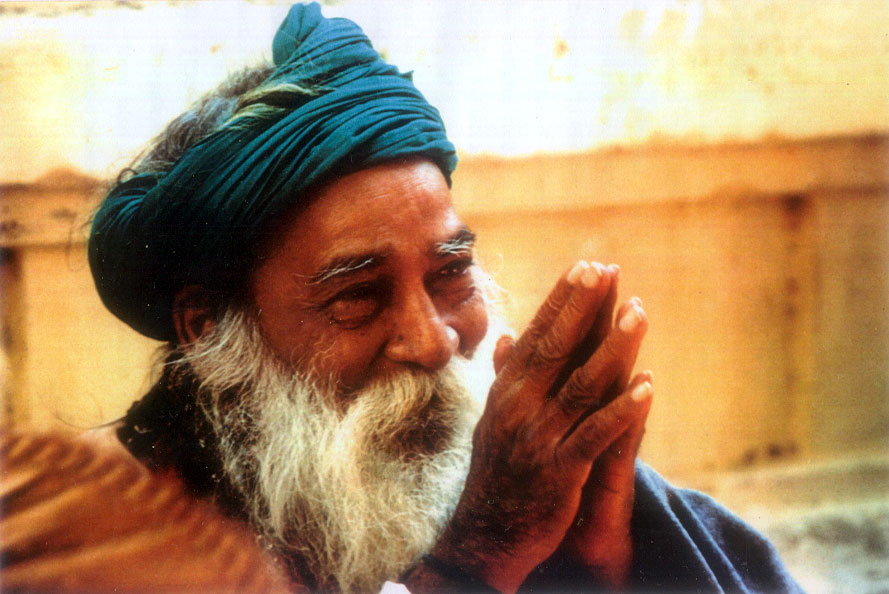
Yogi Ramsuratkumar
Yogi Ramsuratkumar
When I visited Tiruvannamalai I was already aware that – like each snowflake – every human is absolutely unique; that thus each supposedly Self-realized spiritual teacher, seer, saint, guru, yogi, or even avatar uniquely manifests and expresses different aspects of our infinitely potential common Cosmic consciousness. While in Tiruvannamalai I was unforgettably reminded of the uniqueness of each supposedly enlightened teacher on meeting a respected local living saint, Yogi Ramsuratkumar.
People at the Ramana ashram urged me to visit this Yogi, saying that he was was an avadhuta, a mystic living simply beyond worldly social standards. I was told that he was giving morning darshans at his small house near the great Annamalaiyar temple in the center of town.
So one morning, instead of communing with Sri Ramana, I walked into town, bought fruit to offer as prasad [a divine gift] to Ramsuratkumar, and came to his house where already standing outside there was a line of devotees awaiting admittance, each also holding food or flowers to offer him. Especially noteworthy was a richly attired middle aged Indian woman, who was holding a large round silver tray laden with an elaborate array of beautiful fruits and flowers.
I took my place at the end of the line and waited with curiosity in the hot sun. Ultimately, when there were about twenty or more people standing in line, the door opened and Yogi Ramsuratkumar appeared with an attendant to greet each devotee, one by one. With most people he exchanged a few words, accepted their offering and sent them on. Only occasionally did he invite a devotee to enter his house for darshan.
Amazingly, when the woman with the silver tray proffered her elaborate offering, he not only rejected it but seemed to sternly chastise her in Telegu and peremptorily sent her away. (Whereupon I surmised that Ramsuratkumar had determined from her subtle field that the woman was an unworthy aspirant with defiled motives.)
When I reached the head of the line, the Yogi kindly accepted my modest offering and invited me to enter his house parlor with only a few others – an Indian family of mother and father with two young children and a young western woman. Each of us was invited to sit in the parlor on a plain folding chair facing the swami who was standing in front of us.
To my surprise, the house appeared to be very dusty and dirty, and the Yogi looked as if he hadn’t bathed or washed his clothes for a while. Notwithstanding his unkempt appearance and environment my subtle ‘radar’ detected this yogi’s inner purity and I began softly weeping. Later, I concluded that while an attitude of “cleanliness is next to Godliness” might be appropriate for most people, Ramsuratkumar demonstrated that in spirituality it is inner purity rather than outer appearance that is crucial.
After we were seated in his parlor, and offered tea, the yogi enquired of each guest our origins and reasons for visiting him. Thus, he asked me in English from whence and why I had come to India. With tears still seeping I explained that I had come as a spiritual pilgrim to honor my beloved Guruji in Gujurat; and that I was in Tiruvannamalai to honor Sri Ramana Maharshi.
Thereupon, while standing before me the Yogi raised his right hand in blessing pose and in English he intermittently and repeatedly decared “my Father blesses you”. While so blessing me with his raised right hand, the yogi held between the fingers of his left hand and puffed alternately on three lighted bidis (Indian hand-rolled cigarettes, like those sold and smoked by Nisargadatta Maharaj).
Though it didn’t surprise me to see a smoking saint, never before had I imagined a holy man smoking three cigarettes concurrently. So it was apparent – as I had been informed – that Ramsuratkumar was an avadhuta, who lived simply and unconventionally without concern for social standards. In all events, I was and remain ever grateful for his blessings.
Conclusion
Since my 1992 pilgrimage to Tiruvannamalai (and more than ever before as an octogenarian), I have remained unspeakably grateful for my continuing “gift of tears” as a supreme devotional blessing ultimately consistent with highest wisdom of non-duality Self-identity. (See e.g. https://sillysutras.com/crying-for-god-and-other-kundalini-kriyas-rons-memoirs/ ) And especially since darshan with Yogi Ramsuratkumar I have gratefully appreciated the infinite human manifestations of non-duality Reality as LOVE.
Quotations About Religion
“If there is love in your heart,
you don’t have to worry about rules.”
~ Sri Dhyanyogi Madhusudandas
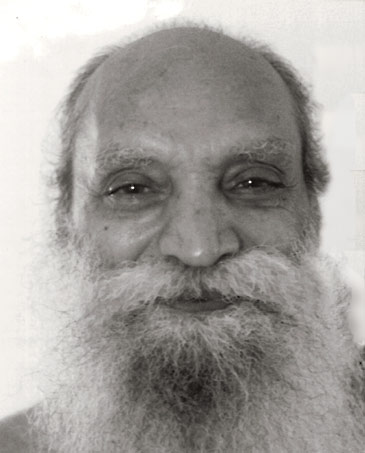
Sri Dhyanyogi Madhusudandas
Introduction
Throughout human history, countless beings have died and suffered in the name of religion, which is often asserted to hypocritically justify immoral partisan political or economic desires.
Because of advanced technologies, wars and other violent behaviors which for centuries have caused immense misery, now threaten all planetary life as we have known it. So – at long last – humans urgently need to abandon wars and warlike behaviors, including those waged in the name of religion.
The following quotations and comments about religion, are deeply dedicated to helping us achieve that urgent necessity.
And so may it be!
Ron Rattner
Quotations About Religion
“My religion is very simple.
My religion is kindness.”
~ Dalai Lama
“Today, … any religion-based answer to the problem of our neglect of inner values can never be universal, and so will be inadequate.”
“The time has come to find a way of thinking about spirituality and ethics that is beyond religion.”
~ Dalai Lama
“This is my simple religion. There is no need for temples; no need for complicated philosophy. Our own brain, our own heart is our temple; the philosophy is kindness.”
~ Dalai Lama
“This is a time for us to remember that in the name of religion more people have died than in all the wars and natural calamities put together. Now more than ever we must understand that the purpose of religion is not to separate us.
True faiths don’t preach hatred and killing, nor did any of the prophets.
It is the people who interpret the scriptures who create the divisions.
Division comes if we put our ego into the teachings of these religions.
Let us strive to be free of that kind of egoism”
~ Swami Satchidananda
“People often ask me, “What religion are you?
You talk about the Bible, Koran, Torah. Are you a Hindu?”
I say, I am not a Catholic, a Buddhist, or a Hindu, but an Undo.
My religion is Undoism. We have done enough damage (with religious dogma). We have to stop doing any more and simply undo the damage we have already done.”
~ Swami Satchidananda – Beyond Words
“The great religions are the ships,
Poets the life boats.
Every sane person I know has jumped overboard.”
~ Hafiz
“I consider myself a Hindu, Christian, Muslim, Jew, Buddhist, and Confucian.”
~ Mahatma Gandhi
“Not Christian or Jew or Muslim, not Hindu, Buddhist, Sufi or Zen. Not any religion, or cultural system. I am not from the East or the West, nor out of the ocean or up from the ground, not natural or ethereal, not composed of elements at all. I do not exist, am not an entity in this world or the next, did not descend from Adam and Eve or any origin story. My place is placeless, a trace of the traceless. Neither body nor soul. I belong to the beloved have seen the two worlds as one and that one call to and know, First, last, outer, inner, only that breath breathing human.”
~ Rumi, ‘Only Breath’
“I have learned so much from God
That I can no longer call myself
a Christian, a Hindu, a Muslim, a Buddhist, a Jew.”
~ Hafiz
“There is one Cosmic Essence, all-pervading, all-knowing, all-powerful.
This nameless formless essence can be approached by any name, any form, any symbol that suites the taste of the individual.
Follow your religion, but try to understand the real purpose behind all of the rituals and traditions, and experience that Oneness.”
~ Swami Satchidananda
“Let us accept all the different paths as different rivers running toward the same ocean.”
~ Swami Satchidananda
“Your daily life is your temple and your religion.”
~ Khalil Gibran – “The Prophet”
“True religion is real living;
living with all one’s soul,
with all one’s goodness and righteousness.”
~ Albert Einstein
“The religion of the future will be a cosmic religion. It should transcend a personal God and avoid dogmas and theology. Covering both the natural and the spiritual, it should be based on a religious sense arising from the experience of all things, natural and spiritual, as a meaningful unity. ”
~ Albert Einstein
“A religion that takes no account of practical affairs and does not help to solve them is no religion.”
~ Mahatma Gandhi
“You are never dedicated to something you have complete confidence in.
No one is fanatically shouting that the sun is going to rise tomorrow.
They know it is going to rise tomorrow.
When people are fanatically dedicated to political or religious faiths or any other kinds of dogmas or goals, it’s always because these dogmas or goals are in doubt.”
~ Robert M. Pirsig, Zen and the Art of Motorcycle Maintenance
“Orthodoxy means not thinking — not needing to think.
Orthodoxy is unconsciousness.”
~ George Orwell, 1984
“Irrevocable commitment to any one religion is not only intellectual suicide;
it is positive unfaith because it closes the mind to any new vision of the world.
Faith is, above all, open-ness—an act of trust in the unknown.”
~ Alan Watts
“Truth is a pathless land, and you cannot approach it by any path whatsoever, by any religion, by any sect.”
~ J. Krishnamurti
“The constant assertion of belief is an indication of fear.”
~ J. Krishnamurti
“Religion is the opium of the masses.”
~ Karl Marx
“Religion is confining and imprisoning and toxic
because it is based on ideology and dogma.
But spirituality is redeeming and universal.”
~ Deepak Chopra
“In religion and politics people’s beliefs and convictions are in almost every case gotten at second-hand, and without examination, from authorities who have not themselves examined the questions at issue but have taken them at second-hand from other non-examiners, whose opinions about them were not worth a brass farthing.”
~ Mark Twain – Autobiography, 1959
At least two thirds of our miseries spring from human stupidity, human malice and those great motivators and justifiers of malice and stupidity, idealism, dogmatism and proselytizing zeal on behalf of religious or political idols.”
~ Aldous Huxley
“There is only one God,
the same God regardless of the labels applied by religion. …
There is only one religion, the religion of Love;
There is only one language, the language of the Heart;
There is only one caste, the caste of Humanity”
~ Sathya Sai Baba
“Wherever I look, I see men quarrelling in the name of religion —
Hindus, Mohammendans, Brahmos, Vaishnavas, and the rest.
But they never reflect that He who is called Krishna is also called Siva, and bears the name of the Primal Energy, Jesus, and Allah as well — the same Rama with a thousand names.
A lake has several ghats. At one the Hindus take water in pitchers and call it ‘jal’; at another the Mussalmans take water in leather bags and call it ‘pani’. At a third the Christians call it ‘water’. Can we imagine that it is not ‘jal’, but only ‘pani’ or ‘water’? How ridiculous! The substance is One under different names, and everyone is seeking the same substance; only climate, temperament, and name create differences.
Let each man follow his own path. If he sincerely and ardently wishes to know God, peace be unto him! He will surely realize Him.”
~ Sri Ramakrishna, The Gospel of Sri Ramakrishna
“Among all my patients in the second half of life …
there has not been one whose problem in the last resort
was not that of finding a religious outlook on life.”
~ Carl Jung
Imagine there’s no Heaven
It’s easy if you try
No hell below us
Above us only sky
Imagine all the people
Living for today
Imagine there’s no countries
It isn’t hard to do
Nothing to kill or die for
And no religion too
Imagine all the people
Living life in peace
You may say that I’m a dreamer
But I’m not the only one
I hope someday you’ll join us
And the world will be as one
Imagine no possessions
I wonder if you can
No need for greed or hunger
A brotherhood of man
Imagine all the people
Sharing all the world
You may say that I’m a dreamer
But I’m not the only one
I hope someday you’ll join us
And the world will live as one
~ John Lennon, “Imagine”
Ron’s comments on urgent necessity of nonviolent reciprocal empathy,
beyond religion-based behaviors
Dear Friends,
The foregoing quotations about religion have been posted to help us avert worldwide catastrophe from false religious interpretations of prophets’ teachings about peace and unity.
Religious prophets have always preached against killing and violence. And every enduring religious, spiritual or ethical tradition has endorsed the “golden rule” of reciprocal empathy and kindness.
For example,
“What is hateful to you, do not do to your neighbor: that is the whole of the Torah; all the rest of it is commentary.” ~ Rabbi Hillel – Judaism
“In everything do to others as you would have them do to you; for this is the law and the prophets.”
~ Matthew 7:12 – Christianity
“Hurt not others in ways you yourself would find hurtful.”
~ Udana-Varga, 5:18 – Buddhism
“This is the sum of duty: do naught unto others which would cause you pain if done to you.”
~ The Mahabharata, 5:1517 – Hinduism
“Not one of you is a believer until he loves for his brother what he loves for himself.”
~ Fortieth Hadith of an-Nawawi,13 – Islam
Yet, countless people have died and suffered throughout human history in the name of religion, which is often cited to hypocritically justify immoral partisan political or economic desires. Because of advanced technologies, wars and other violent behaviors which for centuries have caused immense miseries, now threaten all planetary life as we have known it. So – at long last – humans urgently need to abandon wars and warlike behaviors.
“I know not with what weapons World War III will be fought,
but World War IV will be fought with sticks and stones.”
~ Albert Einstein
Humanity can no longer survive, without practicing nonviolent universal ethical behaviors which transcend divisive religious beliefs cited to justify immorally violent activities.
“Today, … any religion-based answer to the problem of our neglect of inner values can never be universal, and so will be inadequate.”
“The time has come to find a way of thinking about spirituality and ethics that is beyond religion.”
~ Dalai Lama
“We must learn to live together as brothers or perish together as fools.”
“The choice is not between violence and nonviolence but between nonviolence and nonexistence.”
~ Dr. Martin Luther King, Jr.
“Love and compassion are necessities, not luxuries.
Without them humanity cannot survive.”
~ Dalai Lama
To end wars and warlike behaviors, it is imperative that we honor our sacred heart’s inner wisdom over divisive religious, political or economic beliefs, so as to transcend problems of violence created from lower ego levels of human consciousness.
With opened hearts let us stop treating others as we don’t wish to be treated ourselves,
by practicing the ‘do no harm’ “golden rule” of reciprocal empathy.
May we begin treating all sentient beings with kindness, compassion and empathy –
with the same dignity that they wish for themselves.
And so shall it be!
Ron Rattner
Knowing The Unknowable
“Since no one really knows anything about God,
those who think they do are just troublemakers.”
~ Rabia of Basra (first female Sufi saint)
“When the mind is completely empty –
only then is it capable of receiving the unknown.”
“Only when the mind is wholly silent,
completely inactive, not projecting,
when it is not seeking and is utterly still –
only then that which is eternal and timeless comes into being.”
~ J. Krishnamurti
“The world is so unhappy because it is ignorant of the true Self.
Man’s real nature is happiness.
Happiness is inborn in the true Self.
Man’s search for happiness is an unconscious search for his true Self.
The true Self is imperishable; therefore, when a man finds it,
he finds a happiness which does not come to an end.”
~ Sri Ramana Maharshi
The less we think we know,
the more we really Know.”
~ Ron Rattner, Sutra Sayings
Introduction to “Knowing The Unknowable”
Dear Friends,
The following “Knowing The Unknowable” verses paradoxically point to our ever mysterious shared purpose as Earthly incarnates, which can only be known experientially, but not mentally.
They are explained in the foregoing quotations and in comments following the verses.
Please reflect on these writings. And enjoy!
Ron Rattner
Knowing The Unknowable
Knowing is bliss;
ignorance isn’t bliss
– it’s suffering.
Knowing’s not mental,
– it’s existential.
If we think we Know,
we don’t.
Knowing’s not thought,
and knowing’s not taught.
Knowing’s never then or how;
Knowing’s always here and now.
So, Knowing is this:
It’s Being —
Bliss —
NOW!
Ron’s audio recitation of “Knowing The Unknowable”“Knowing The Unknowable”
Ron’s explanation of “Knowing The Unknowable”
Dear Friends,
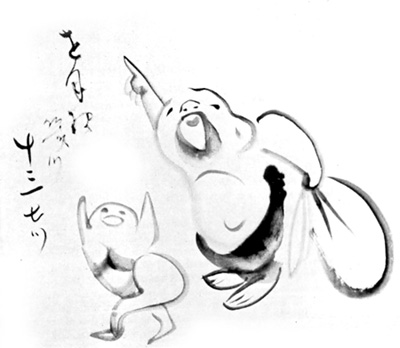
In space/time duality reality we can’t express Ultimate Truth, which is ineffable – beyond conception, comprehension, imagination, or belief; but (like the Buddha legendarily pointing to the moon), we can only indicate it.
The forgoing “Knowing The Unknowable” poem paradoxically points to our ever mysterious shared purpose as Earthly incarnates.
We’ve appeared on the ‘Earth branch of the great Cosmic university’ as spiritual students, to learn our true Self-identity as eternal Love.
Knowingly or unknowingly we all long for LOVE – which is our common spiritual essence and Source. And we’re here to find it, by compassionately and lovingly living our lives.
As learning incentives, many of us suffer painful experiences. Inevitably we thereby learn that knowing Divinity comes not from fearful or divisive ego-mind efforts or judgmental hostility, but from opened hearts and stilled minds – lovingly letting go of all ideas of being separate from or exploiting each other or Nature. Thus
Dedication
Today’s quotations, comments and poetic verses
are deeply dedicated to inspiring timeless realization
of our universal aspiration –
to experientially “Know the Unknowable” by
Being –
Bliss –
NOW!
And so may it be!
Ron Rattner
Justice versus Judgment:
Judge Not Lest Ye Be Judged;
Resist Not Evil
“Ignorance is the root of all evil.”
~ Ron Rattner, Sutra Sayings
“Resist not evil.”
~ Matthew 5:39
“Judge not, that you be not judged.
For with what judgment you judge, you will be judged; and with the measure you use, it will be measured back to you.”
~ Matthew 7:1-5
“Judge not according to the appearance,
but judge righteous judgment.”
“Ye judge after the flesh; I judge no man.”
~ John 7:24; 8:15
“We cannot change anything until we accept it.
Condemnation does not liberate, it oppresses.”
~ Carl Jung
“Great Spirit, grant that I may not criticize my neighbor
until I have walked a mile in his moccasins.”
~ Native American prayer
“One ought to examine himself for a very long time before thinking of condemning others.”
~ Moliere
“Judge not thy neighbor until thou comest into his place.”
~ Rabbi Hillel
“But let justice roll on like a river,
righteousness like a never-failing stream!”
~ Amos 5:24
“Only from the heart can you touch the sky.”
“People of the world don’t look at themselves,
and so they blame one another.”
“Your task is not to seek for love, but merely to seek and find
all the barriers within yourself that you have built against it.”
~ Rumi
“If we could change ourselves, the tendencies in the world would also change. As a man changes his own nature, so does the attitude of the world change towards him. … We need not wait to see what others do.”
~ Mahatma Gandhi
“Evil cannot be overcome by more evil.
Evil can only be overcome by good.
It is the lesson of the way of love.”
~ Peace Pilgrim
“Every action, every thought, reaps its own corresponding rewards. Human suffering is not a sign of God’s, or Nature’s, anger with mankind. It is a sign, rather, of man’s ignorance of divine law. . . .
Such is the law of karma: As you sow, so shall you reap. If you sow evil, you will reap evil in the form of suffering. And if you sow goodness, you will reap goodness in the form of inner joy.”
~ Paramahansa Yogananda

Introduction to Justice versus Judgment
Dear Friends,
As we enter an Aquarian age of immense opportunity with immense jeopardy, it has never before been so imperative for Humankind to heed and follow the ancient teachings of rare avatars and mystic masters to live as LOVE, in harmony with all Life everywhere.
For the first time in our recorded history we are forced to realize that because of advanced technologies any more war will probably trigger an omnicidal nuclear, ecological, biological, or radiological catastrophe insanely ending earth-life as we’ve known it.
Yet, paradoxically, we concurrently have gained unprecedented technical capacity to sustainably and peacefully transcend human suffering from injustice, exploitation, starvation and poverty. And in these very violent and politically polarized times of immense suffering, yet immense opportunity, many are awakening to our infinitely unlimited human potentialities by embracing unconditional LOVE for everyone and everything.
To help us learn to live as LOVE, the following essay and comments address often misunderstood perennial spiritual issues of justice versus judgment as demonstrated by the life and teachings of Jesus, who was a rare avatar and exemplar of Universal LOVE with social justice.
Because these teachings are extremely relevant to our unprecedented current era, I urge our deep reflection upon them.
Ron Rattner
Justice versus Judgment*
Q. In his sermon on the mount, Jesus counseled “Resist not evil.” and “Judge not, that you be not judged.” But the Bible encourages us to live righteously and seek justice. How is it possible for us to pursue justice and righteousness without judging and resisting “evil”?*
A. By following our sacred heart with love, forgiveness and empathy we can live with justice and righteousness in a manner consistent with Jesus’ teachings – his words and life example.
Jesus was a rare Divine being who – like a Buddha or Krishna – transcended the illusion of separation from God. From his Divine perspective, Jesus realized and proclaimed that “I and the Father are one” [John 10:30] , and he perceived as “evil” only that which – from ignorance of Divine law – creates disharmony with Divine order and consequent suffering. But, as a loving Divine truth teller he did not condemn beings acting with the the illusion of separation from God – only their ignorant behaviors. [John:3:17]
Jesus knew that – until realizing our unity with Divinity – we reap as we sew. [e.g. Job 4:8; Galacians 6:7]; that we suffer the karmic consequences of our unconsciously unenlightened behaviors. Thus from his rare cosmic perspective he compassionately could see that our ignorant behaviors are karmically predestined, and do not arise from presumed free will.
As a Divine being, Jesus also knew that true Vision comes from intuitive insight, not eyesight; that our perceived separation from others and from Nature is an illusion of consciousness; and, that blind to our own repressed faults we often project them upon and detect them in others.
As Rumi observed:
“People of the world don’t look at themselves, and so they blame one another.” [But,] “Only from the heart can you touch the sky.”
So Jesus cautioned the Pharisee fundamentalists of his time to
“Judge not according to the appearance,
but judge righteous judgment.” [John 7:24]
And he taught: “Judge not, that you be not judged.
For with what judgment you judge, you will be judged;
and with the measure you use,
it will be measured back to you.” [Matthew 7:1-5]
Thus, when fundamentalist Pharisees brought to Jesus a woman allegedly caught in adultery, a capital crime, Jesus challenged any one of them who was without sin to cast the first stone at her. Speaking as non-judgmental Divine Love, Jesus explained his refusal to condemn her thus:
“Ye judge after the flesh; I judge no man.”
[John 8:15]
Without judging beings but criticizing their disharmonious behaviors, Jesus was a passionate social reformer and redeemer who frequently decried hypocritical conduct and ethics by people who did not ‘walk their talk’ but practiced the very behaviors they decried – like those whose piety was on their tongue but not in their heart; those who claimed to love God but hated others. [John 4:20; Matthew 15:7-9]
And without judging the beings but their behaviors he cast out those hypocritically changing money and conducting commerce in the sacred temple courtyard, thereby demonstrating that we cannot serve both God and greed. [Matthew 6:24 and 21:12]
So, it appears that Jesus, who was a social reformer, did not intend to discourage us from living piously while seeking justice and righteousness for others and society. Bible passages against resisting “evil” or “judging” others are warnings against hypocritically and insensitively criticizing or opposing perceived faults or disharmonious behaviors in others which we cannot see in our own shadow selves.
Also, they are cautions against reflexive or revengeful resistance or opposition to perceived “evil”, because when we see ‘through a glass darkly’ what we resist persists.
Jesus’ admonition to not resist “evil” was given after his allusion to the Book of Exodus teaching about taking “An eye for an eye, and a tooth for a tooth” [Exodus 21:23-5] which was then misunderstood and strictly interpreted by Pharisees as encouraging revenge or retribution. But when we ignorantly act with reflexive revenge, we are disharmonious with divine law and must suffer the karmic consequences.
So rather than vindictively seeking retribution for wrongs, or reactively condemning others, or judgmentally attempting to change them, it is wise to first empathetically look within to see and change our own undesirable traits. Then like Gandhi we will “not cooperate with evil” but be the non-violent change we wish to see in the world and lovingly inspire others to do likewise.
And so it shall be!
Ron Rattner
Footnote.
*Because the New Testament gospels were all ‘hearsay’ written and translated from Aramaic into Greek and various other languages long after Jesus’ death, we cannot know with certainty the meaning or accuracy of current translations of his sermon on the mount. So there are many differing interpretations of the words “Resist not evil.” and “Judge not, that you be not judged.” Their true meaning and intent can best be determined from their context and from Jesus’ own Divine actions to uplift the world rather than condemn it. Our interpretation is intuitive, not scholarly, and based on perennial principles taught by most enduring religious, spiritual and ethical traditions, not just Christianity. You are free to question or reject it.
Ron’s comments on “Justice versus Judgment”.
Dear Friends,
This posting addresses perennial spiritual issues which are extremely relevant to the present advent of an unprecedented Aquarian age of great risk but great potential. Worldwide we are living in very violent and politically polarized times.
In order to peacefully resolve current critical political and environmental threats from a spiritual perspective, we must mindfully calm our fearfully disturbed, judgmental and reactive states of mind. Rather than vindictively seeking retribution for wrongs, or reactively condemning others, or judgmentally attempting to change them, it is wise to first empathetically look within to see and change our own undesirable mental habits. Thereby with quiet minds and open hearts we can non-violently and non-judgmentally resist injustice, while honoring the spiritual essence and universal equality of everyone everywhere.
The foregoing quotations and interpretations of Jesus’ scriptural teachings can help us consider important philosophical and pragmatic perspectives about issues of justice versus judgment. Also hereafter discussed is my relevant experience as a social justice attorney.
Discussion
For much of my adult life as an egalitarian litigation lawyer, I tended to be judgmental and unforgiving of perceived wrongdoers. Thus, on retiring from legal practice in 1992 it was easy for me to stop lawyering – by deactivating my law license – but hard to stop gratuitously judging or blaming others who seemed to act hypocritically or harmfully.
But after my midlife spiritual awakening I decided that we are all here to evolve by gradually realizing and actualizing our common spiritual Oneness with all Life – beyond our mistakenly perceived separation from each other; and, that we can advance such evolution by mindful identification, observation and purification of our mental tendencies and obscurations impeding realization of Oneness.
So, with increasing mindfulness, I began identifying my particular mental challenges and evolutionary opportunities in this lifetime. And gradually I realized that – as a litigation lawyer and ardent social justice advocate – I had longtime propensities of often being outspokenly, acerbically, and reactively judgmental, unforgiving and sometimes angry about perceived injustices; that these tendencies were not helping others or me; and that they were impediments to spiritual evolution.
Since first identifying these unhelpful tendencies, it has been challenging for me to transcend them. Most challenging have been instances of apparently harmful betrayal of private or public trust. Apart from numerous flagrant betrayals of public welfare by politicians and corporations which I have resisted, there have been a few unforgettable and psychologically traumatic events which I experienced as personal betrayals, but now see with forgiveness as disguised blessings which furthered my spiritual evolution.
Ultimately I have realized that blame, rancor or vengeance never change others and are always incompatible with a peaceful mind; that all unforgiving behavior is ego trying to preserve its falsely imagined separate identity; and, that any bitterness we harbor against a perceived “other” separates us from our divine Oneness.
Thus Peace Pilgrim insightfully instructed that:
“If you are harboring the slightest bitterness toward anyone, or any unkind thoughts of any sort whatever, you must get rid of them quickly. They are not hurting anyone but you. It isn’t enough just to do right things and say right things – you must also think right things before your life can come into harmony.”
~ “Peace Pilgrim – Her Life and Work in Her Own Words”
And because human unconsciousness and ignorance of our true self-identity is the root cause of all perceived evil, the Buddha taught that:
“To understand everything is to forgive everything.”
Dedication
May these teachings help all of us learn to forgive everyone and everything,
and to not judge or condemn apparent evil,
but to nonviolently resist and transcend it
with love, righteousness and justice, and
May we thereby live ever happier, peaceful and harmonious lives.
And so may it be!
Ron Rattner
It’s In Every One of Us
~ The Eyes Have It
“The way is not in the sky.
The way is in the heart.”
~ Buddha
It’s in every one of us to be wise
Find your heart
And open up both your eyes
We can all know every thing
Without ever knowing why
It’s in every one of us by and by
~ David Pomeranz
The eyes are the windows of the soul.
~ Traditional Proverb
“The windows of my soul I throw
Wide open to the sun.”
~ John Greenleaf Whittier, My Psalm
“Open thine eyes — bright windows to the soul”
~ William Hetherington
“It is the soul itself which sees and hears,
and not those parts which are, as it were,
but windows to the soul…”
~ Marcus Tullius Cicero
“There is a light that shines beyond all things on Earth, …
beyond the highest, the very highest heavens.
This is the light that shines in your Heart.”
~ Chandogya Upanishad 3.13.7
“Let my soul smile through my heart
and my heart smile through my eyes,
that I may scatter rich smiles in sad hearts.”
~ Paramahansa Yogananda
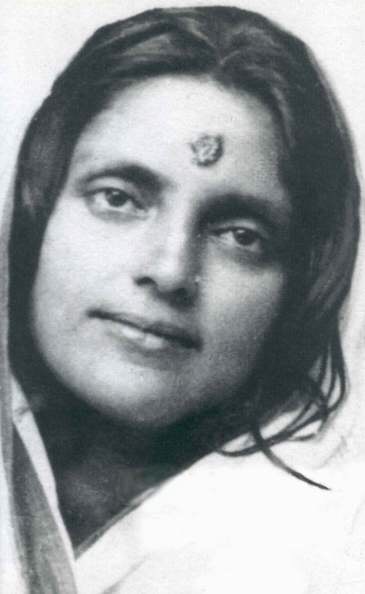
Anandamayi Ma (April 30, 1896 – August 27, 1982)
Ron’s Introduction
Dear Friends,
Soon after my midlife spiritual awakening in the 1970’s, I listened (on New Dimensions Radio) to a then popular spiritual song “It’s In Every One of Us”, composed, arranged and beautifully sung by David Pomeranz. I found the lyrics and heartfelt performance to be exceptionally inspiring. They authentically communicated a simple but very profound spiritual message, about looking within to find and follow our heart.
I don’t remember ever again hearing this song for many years after the 1970’s. Then, more than thirty years later, while preparing to launch the SillySutras website, I synchronistically discovered an online video of David Pomeranz’s original performance, enhanced by inspiring visuals of the luminous eyes of diverse members of our global family.
Soon after launching SillySutras.com I posted the video, together with my “The Eyes Have It” poem below (that it inspired) about our eyes as windows of the soul.
Especially in these extraordinarily challenging times of extreme global turmoil and stress, I sincerely think that this exceptionally artistic video, with its profound spiritual message of finding peace and happiness within by following our heart, can be very helpful.
So I’ve again posted it, with refrain lyrics and amended poetry verses. And I sincerely hope you enjoy it.
Ron Rattner
The Eyes Have It
~ by Ron Rattner
The eyes are
the Sacred soul’s
windows to the world;
The eyes have it –
They gleam with Divinity
of Inner Infinity –
With our Sacred Heart’s
Eternal Light of LOVE.
May they ever remind us
that our Truth and our Way
is always within –
Not in the outer World,
But always
“In Every One of Us”.
And so shall it be!
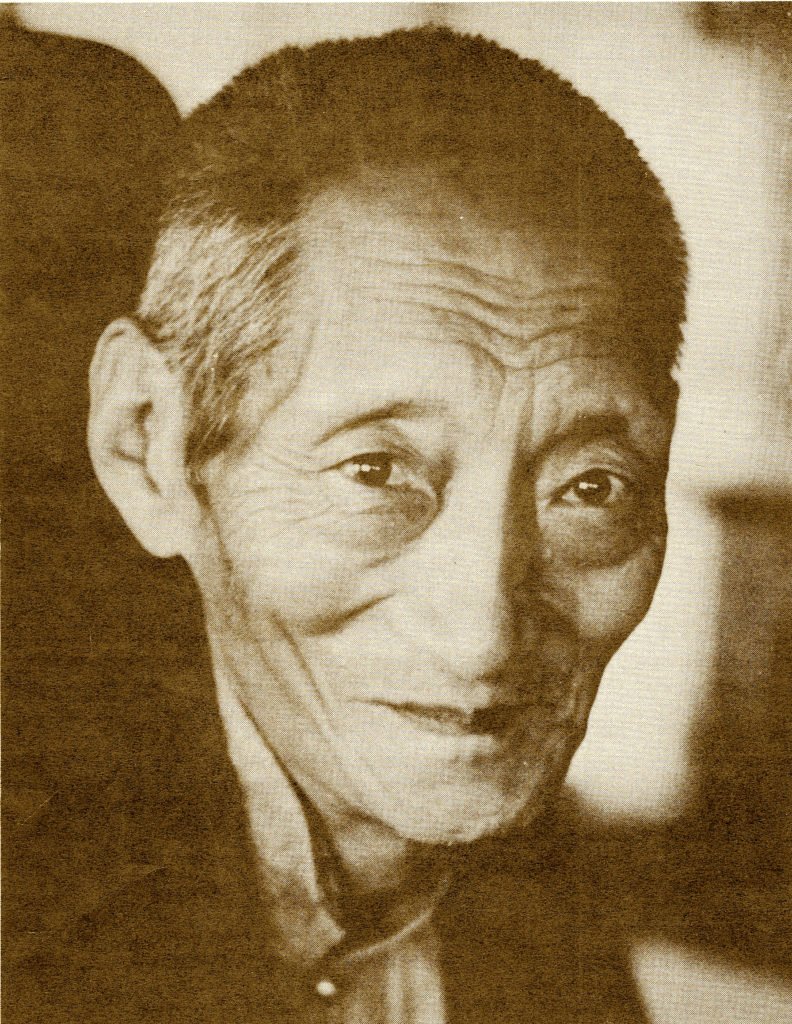
Ven. Kalu Rinpoche (1905 – May 10, 1989)
“It’s In Every One of Us” – by David Pomeranz
Photos & Video by Wernher Krutein.
“It’s In Every One of Us” – Refrain Lyrics:
It’s in every one of us to be wise
Find your heart
And open up both your eyes
We can all know every thing
Without ever knowing why
It’s in every one of us by and by
Dedication
May the luminosity of the foregoing music, images and writings
open our hearts to the Eternal Light in every one of us,
and help uplift each of us – like Paramahansa Yogananda – to
“Let my soul smile through my heart
and my heart smile through my eyes,
that I may scatter rich smiles in sad hearts.”
And so may it be!
Ron Rattner